
France
Crème Brûlée
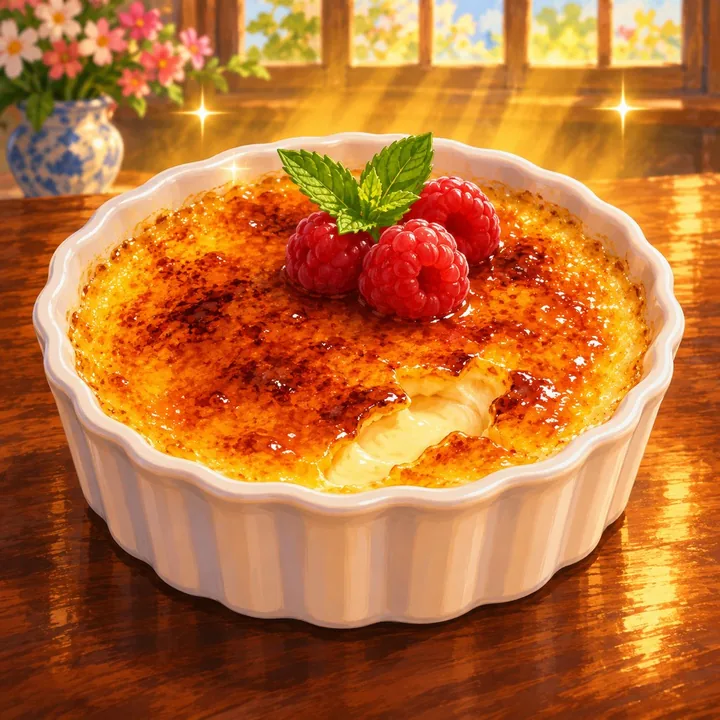
Crème brûlée is a contrast: cold, barely set custard beneath a sheet of hot caramel thin enough to crack with a spoon. Only cream, yolks, sugar and vanilla go in, so texture is everything. Take the custards out of the oven while the centers still wobble, because they finish setting as they cool.
- Prep
- 5 hr
- Cook
- 55 min
- Total
- 5 hr 55 min
- Serves
- 6
Ingredients
 3 cups (720 ml) heavy cream
 1 vanilla bean, split lengthwise, or 2 tsp pure vanilla extract
 6 large egg yolks
 1/2 cup (100 g) granulated sugar, plus 6 tbsp (75 g) for the tops
 1 pinch salt
Instructions
- Heat the oven to 325°F (165°C) with a rack in the middle. Set six 6-oz (180 ml) ramekins in a roasting pan lined with a kitchen towel, which stops them from sliding.
- Heat the cream and vanilla bean in a saucepan over medium heat for about 5 minutes, until small bubbles form around the edge. Do not let it boil. Turn off the heat and steep for 15 minutes, then scrape the seeds into the cream and remove the pod. If using extract, skip the steep and add it in the next step.
- Whisk the yolks, 1/2 cup (100 g) sugar and salt for 1 minute, until pale. Pour in the warm cream in a thin stream, stirring gently rather than beating, so you don't create foam. Strain through a fine sieve into a pitcher, stir in the vanilla extract, if using, and skim off any bubbles.
- Divide the custard among the ramekins. Place the pan in the oven and pour just-boiled water from a kettle into it until it comes halfway up the sides of the ramekins.
- Bake for 35 to 45 minutes. The edges should be set and the center should jiggle like gelatin, not ripple like liquid. An instant-read thermometer should show about 170°F (77°C) in the center, safely above the 160°F (71°C) minimum for egg dishes.
- Lift the ramekins from the water and cool them on a rack for 30 minutes. Cover and refrigerate for at least 4 hours or up to 3 days.
- Just before serving, blot any moisture from the surface and sprinkle 1 tablespoon sugar over each custard, tilting to spread it evenly. Move a kitchen torch in small circles a few inches above the surface until the sugar melts and turns deep amber.
- If you don't have a torch, use the broiler. Heat it fully, set the ramekins on a sheet pan on the top rack and broil for 1 to 3 minutes, turning the pan and watching constantly. A broiler browns less evenly and warms the custard, so return them to the fridge for 15 minutes. Let the crust harden for 2 minutes before serving.
Tips
- A grainy or curdled custard was baked too long or too hot. Next time, start checking at 30 minutes and always use the water bath.
- Make the crust within about an hour of serving. Caramel slowly absorbs moisture from the custard and goes soft in the fridge.
- Use shallow, wide dishes if you have them. They give more crust per spoonful, and they bake in about 25 to 30 minutes.
Did you know?
- Creme brulee means burnt cream, for its crackly caramel top.
- Chefs melt the sugar with a small torch until it turns to glass.
- Tapping through the crust with a spoon is half the fun.
Questions
Can you make crème brûlée without a torch?
Yes. A hot broiler melts the sugar in 1 to 3 minutes. The crust will be less even than with a torch, so turn the pan often and don't look away.
Why is my crème brûlée runny?
It came out of the oven too soon or hasn't chilled long enough. The center should reach about 170°F (77°C) and chill for at least 4 hours.
How far ahead can I make crème brûlée?
Bake the custards up to 3 days ahead and keep them covered in the fridge. Add and melt the sugar only when you're ready to serve.
 Quiche Lorraine
 Boeuf Bourguignon