
Japan
Shabu Shabu
Shabu-shabu / しゃぶしゃぶ
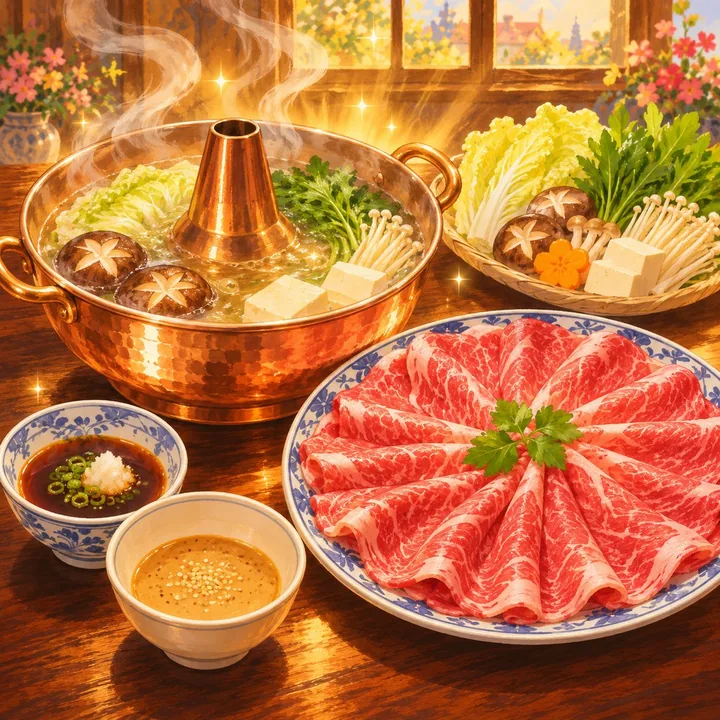
Shabu shabu is a hot pot where everyone cooks their own food at the table, a few seconds at a time. The broth is deliberately plain, just kombu and water, so the flavor comes from the beef and two dipping sauces. Slice thickness matters more than anything else here: the beef must be thin enough to cook in one or two swishes.
- Prep
- 35 min
- Cook
- 40 min
- Total
- 1 hr 15 min
- Serves
- 4
Ingredients
 1 1/2 lb (680 g) well-marbled ribeye or sirloin, sliced paper thin
 1 piece kombu, about 4 by 4 inches (10 by 10 cm)
 1/2 head napa cabbage, cut into 2-inch (5 cm) pieces
 14 oz (400 g) medium-firm tofu, cut into large cubes
 6 fresh shiitake mushrooms, stems removed
- 7 oz (200 g) enoki mushrooms, roots trimmed
 1 small carrot, cut into thin coins
 4 oz (115 g) chrysanthemum greens or spinach
 4 scallions, 3 cut into long pieces and 1 thinly sliced
 1/2 cup (120 ml) ponzu sauce
 1/4 cup (60 g) Japanese sesame paste or tahini
 3 tbsp soy sauce
 2 tbsp rice vinegar
 1 tbsp mirin
 1 tbsp sugar
 2 servings udon noodles, fresh or frozen
 Salt, to season the final broth
Instructions
- Put the kombu and 8 cups (1.9 L) cold water in a wide pot, ideally a donabe or other shallow flameproof pot. Soak for 30 minutes.
- While it soaks, cut the cabbage, tofu, mushrooms, carrot, greens and scallions and arrange them on platters. Lay the beef in single overlapping slices on a separate plate and refrigerate until the table is ready.
- Whisk the sesame paste, soy sauce, vinegar, mirin and sugar in a bowl. Loosen with 3 tablespoons of the kombu water until it pours like heavy cream. Divide it and the ponzu among small dipping bowls for each person, and put the sliced scallion on the table.
- Heat the pot over medium heat and remove the kombu just before the water boils, about 10 minutes. Boiling makes kombu slimy and bitter.
- This is a tabletop dish, so move the pot to a portable butane burner in a well-ventilated room or use an electric hot pot. If you have neither, keep the pot on the stove and serve in small rounds. Keep the broth at a steady simmer rather than a hard boil.
- Add the carrot, shiitake, tofu and cabbage stems and cook for about 5 minutes. Add the leaves, enoki, greens and scallion pieces as the meal goes on, as they take only a minute or two.
- To cook the beef, use separate chopsticks for the raw meat. Hold one slice and swish it through the simmering broth for 10 to 20 seconds, until no pink remains, then dip and eat. Cook one or two slices at a time. Skim off any foam.
- When the meat and vegetables are gone, season the broth lightly with salt. Boil the udon in it for 2 to 3 minutes and ladle noodles and broth into the bowls.
Tips
- Japanese and Korean markets sell beef already sliced for hot pot. To cut it yourself, freeze the meat for 1 to 2 hours, adding that time to the prep, until it is firm but not solid, then slice it across the grain with a very sharp knife.
- Give each person one pair of chopsticks for raw beef and another for eating, and never swap them. Keep raw meat chilled until the moment you serve it, and bring out small amounts at a time.
- Sesame paste and tahini are not identical. Japanese paste is made from toasted seeds, so tahini needs a few drops of toasted sesame oil to taste the same.
Did you know?
- Shabu-shabu is named for the swish-swish sound of beef in the broth.
- Each paper-thin slice cooks in just a few seconds.
- After the meal, noodles often go in the broth to finish it.
Questions
What does shabu shabu mean?
It is a Japanese sound word, usually explained as the swishing noise the meat makes as it moves through the broth. It captures the method: a quick swish, not a long boil.
What is the difference between shabu shabu and sukiyaki?
Shabu shabu simmers food in a plain kombu broth and gets its flavor from dipping sauces. Sukiyaki cooks the beef in a sweet soy mixture and is traditionally dipped in raw egg.
Do I need special equipment for shabu shabu?
A portable burner or electric hot pot is what makes it a tabletop meal. You can cook on the stove and bring out each round, though the pot cools quickly and slows the pace.
 Ramen
 Chirashi Sushi