
Thailand
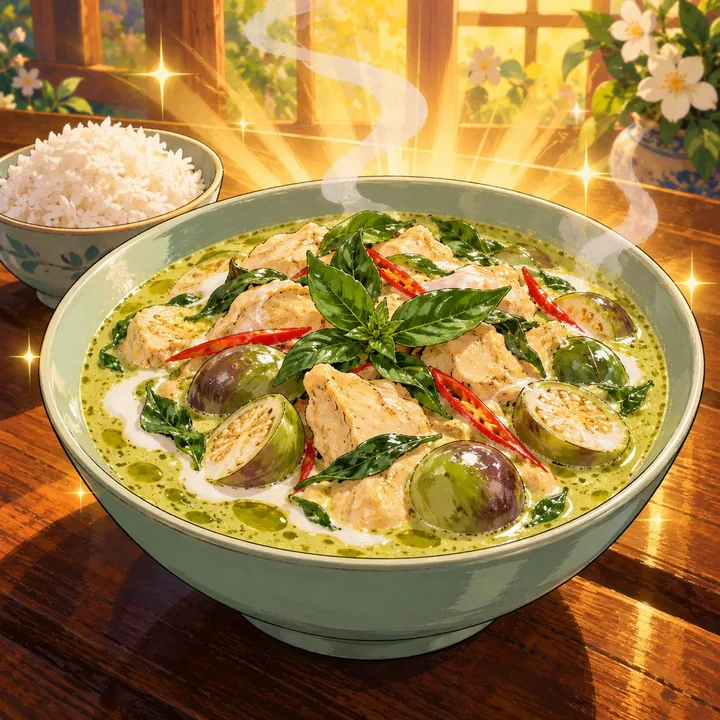
Thai Green Curry
Kaeng Khiao Wan / แกงเขียวหวาน
Kaeng khiao wan means sweet green curry, and the sweet is usually explained as describing its soft, creamy color rather than a sugary taste. It should be hot, salty and fragrant. The step that decides the flavor is frying the paste in thick coconut cream until the oil separates, because paste added straight to liquid tastes raw and thin.
- Prep
- 15 min
- Cook
- 30 min
- Total
- 45 min
- Serves
- 4
Ingredients
 1 1/2 cups (300 g) jasmine rice, plus 2 cups (480 ml) water
 2 cans (13.5 oz / 400 ml each) full-fat coconut milk, unshaken
 1/4 cup (60 g) Thai green curry paste
 1 lb (450 g) boneless, skinless chicken thighs, sliced into bite-size strips
 1/2 cup (120 ml) chicken stock
 6 makrut lime leaves, torn, or the zest of 1 lime
 8 oz (225 g) Thai eggplants, quartered, or 1 Japanese eggplant, cut into chunks
 2 tbsp fish sauce
 1 tbsp palm sugar or light brown sugar
 1 cup (20 g) Thai basil leaves
 1 to 2 fresh red chilies, sliced on an angle
Instructions
- Start the jasmine rice first, since it holds its heat well. Wash it in two changes of water, then boil it with the 2 cups (480 ml) of water. Cover, drop the burner to its lowest setting and give it 15 minutes, followed by 10 more off the heat with no peeking.
- Coconut cream rises to the top of an undisturbed can, and that layer is what you want. Scoop it into a wok and bubble it over medium heat for about 4 minutes, until it looks curdled and clear oil beads on the surface.
- Fry the curry paste in that oil for 2 minutes. You're looking for a sharp smell of chili and lemongrass and oil tinted green.
- Turn the chicken strips through the green oil for 3 to 4 minutes, until no raw pink shows on the outside.
- Thin the pot with the coconut milk left in the cans and the stock, and drop in the lime leaves and eggplant. Keep it at a lazy simmer for 12 to 15 minutes. The eggplant should give easily to a fork and the chicken should reach 165°F (74°C).
- Now add the fish sauce and sugar. Green curry should lean salty and spicy, with sweetness only in the background, so go easy on more sugar.
- Turn off the heat and stir in the basil and red chilies. Serve with the rice right away, before the basil turns dull.
Tips
- Brands of green curry paste differ a lot in heat and salt. Start with the amount here, taste the finished sauce, and fry a little more in a separate pan if you want it stronger.
- If the coconut cream won't separate, your brand may contain stabilizers. Continue frying the paste for an extra minute or two, and the curry will still taste good.
- Italian basil is the common substitute for Thai basil, but it lacks the anise note. Add a few mint leaves or simply use it as is.
Did you know?
- Thai green curry gets its bright color from fresh green chilies.
- Green curry is often the spiciest of the Thai curries.
- The eggplants in Thai green curry are small, round and green.
Questions
Why isn't my green curry very green?
Green curry is usually pale, closer to olive than bright green, because the coconut milk softens the color. Pastes made with plenty of fresh green chilies look a little brighter.
Is green curry hotter than red curry?
It often is, since green paste is based on fresh green chilies. The heat varies widely between brands, so taste your paste before deciding how much to use.
Can I use light coconut milk?
It's not recommended. Light coconut milk doesn't have enough fat to separate, so you can't properly fry the paste, and the sauce turns out thin.
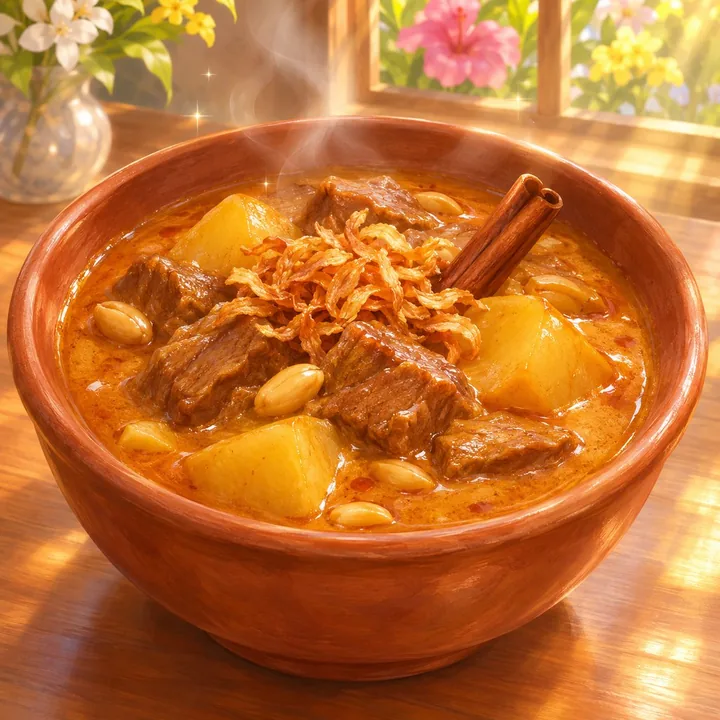 Massaman Curry
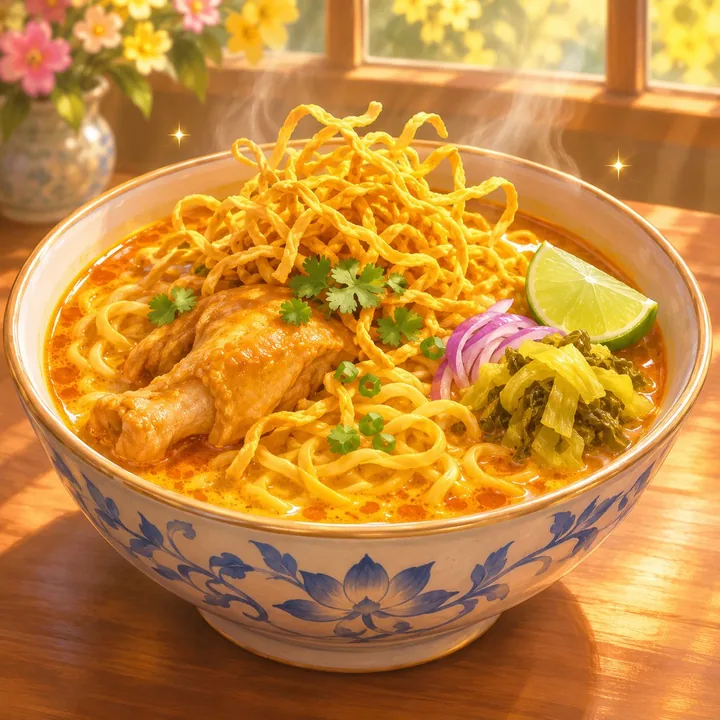 Khao Soi