
Korea
Bibimbap
비빔밥
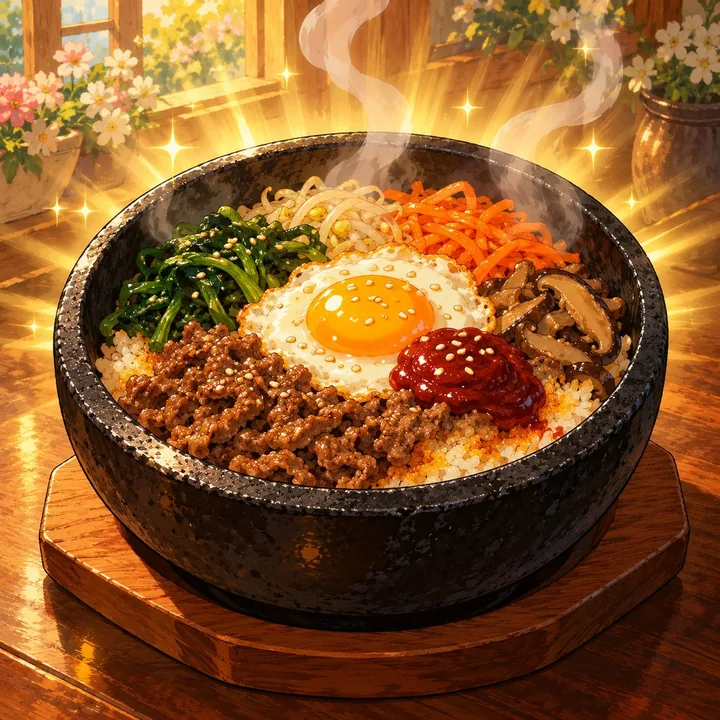
The name bibimbap literally means mixed rice, and the mixing is not optional. Each vegetable gets cooked and seasoned on its own, so it keeps its own flavor and texture until the moment you stir everything together at the table. That separate seasoning is the real work here, and the reason a bowl tastes layered instead of like plain rice with sauce.
- Prep
- 40 min
- Cook
- 35 min
- Total
- 1 hr 15 min
- Serves
- 4
Ingredients
 2 cups (400 g) short-grain white rice, plus 2 1/2 cups (600 ml) water
 8 oz (225 g) ribeye or sirloin, very thinly sliced
 3 tbsp soy sauce, divided
 2 tbsp sugar, divided
 4 garlic cloves, minced, divided
 3 tbsp toasted sesame oil, divided
 10 oz (280 g) fresh spinach
 8 oz (225 g) mung bean or soybean sprouts
 1 tsp salt, divided
 3 tbsp vegetable oil, divided
 2 medium carrots, cut into matchsticks
 1 medium zucchini, cut into matchsticks
 6 oz (170 g) shiitake mushrooms, sliced
 4 large eggs
 1/4 cup (70 g) gochujang
 1 tsp rice vinegar
 1 tbsp toasted sesame seeds
Instructions
- Bibimbap needs sticky rice that clumps a little, so use short grain and don't skip the rinse. Cook it in a rice cooker, or bring it to a boil in a pot with the 2 1/2 cups (600 ml) of water, then cover and cook for 15 minutes over very low heat and steam it off the burner for 10.
- Toss the beef with 2 tablespoons of the soy sauce, 1 tablespoon of the sugar, half the garlic and 1 teaspoon of the sesame oil. Cover and refrigerate for 20 minutes.
- Bring a pot of water to a boil. Blanch the spinach for 30 seconds, then scoop it out, rinse under cold water and squeeze very dry. Chop it roughly and toss with the remaining garlic, 1 teaspoon of the sesame oil and 1/4 tsp of the salt.
- Boil the sprouts in the same water for 2 minutes, or 5 minutes for soybean sprouts. Drain, squeeze gently and toss with 1 teaspoon of the sesame oil and 1/4 tsp of the salt.
- Heat 1 tablespoon of the vegetable oil in a skillet over medium-high. Cook the carrots with half the remaining salt for 2 minutes, until just tender, and lift them out. Use the oil left in the pan and the rest of the salt for the zucchini, then lift it out too.
- Add 1 tablespoon of the vegetable oil and cook the mushrooms for 3 to 4 minutes, until browned. Stir in the remaining 1 tablespoon of soy sauce and set aside.
- Raise the heat to high and cook the beef in a single layer for 2 to 3 minutes, until browned and cooked through. For whole cuts, USDA guidance is 145°F (63°C) with a 3-minute rest.
- Stir the gochujang with the remaining 1 tablespoon sugar, the remaining sesame oil, the vinegar and half of the sesame seeds. Loosen with 1 to 2 tablespoons of water until it drizzles.
- Fry the eggs sunny side up in the remaining vegetable oil over medium heat for 3 minutes. Divide the rice among 4 bowls and arrange the vegetables and beef in separate sections on top. Add an egg, scatter on the rest of the sesame seeds and serve with the sauce. Mix everything together before eating.
Tips
- For the crackling crust of dolsot bibimbap without a stone bowl, oil a cast-iron skillet with sesame oil, press in the rice and assembled toppings, and cook over medium heat for 5 minutes, until the bottom sizzles and browns.
- A runny yolk isn't fully cooked. Fry it until firm for small children, older adults, pregnant diners or anyone whose immune system is compromised.
- Swap in firm tofu for the beef, using the same marinade, for a vegetarian bowl. If you're avoiding gluten, check your gochujang label, since many brands contain wheat, and use tamari in place of soy sauce.
Did you know?
- Bibimbap means "mixed rice"; you stir everything together before eating.
- The city of Jeonju in Korea is famous for its bibimbap.
- Dolsot bibimbap comes in a hot stone bowl that makes the rice crispy.
Questions
How do you eat bibimbap?
Add as much sauce as you want, break the yolk and mix everything thoroughly with a spoon before your first bite. The mixing is the point of the dish.
What's the difference between bibimbap and dolsot bibimbap?
Dolsot bibimbap is served in a very hot stone bowl that fries the bottom layer of rice into a crisp crust. Regular bibimbap comes in an ordinary room-temperature bowl with soft rice.
What is gochujang?
A thick Korean paste of fermented chili, glutinous rice and soybeans. It brings heat, sweetness and funk at once, and sriracha is not a close match. Look for it in tubs at Korean or larger grocery stores.
 Bulgogi
 Samgyetang