
Korea
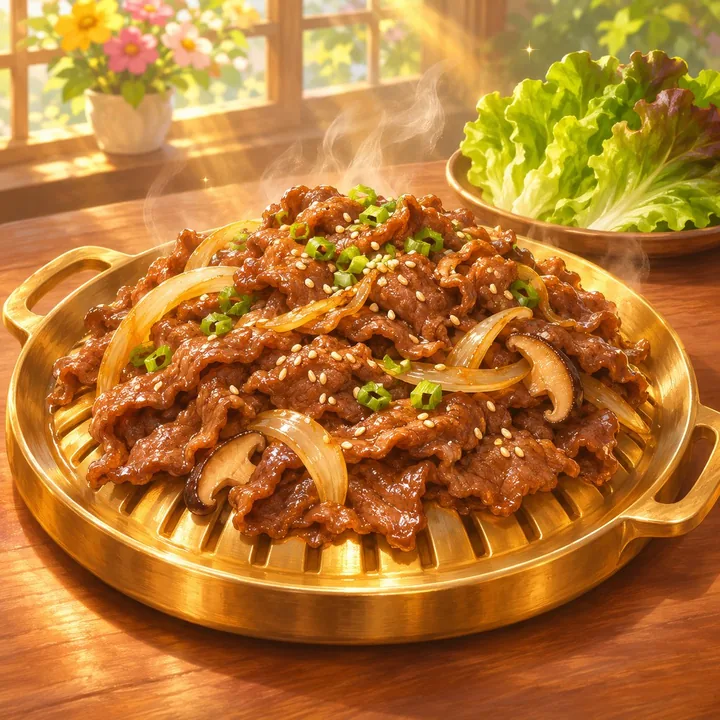
Bulgogi
불고기
Bulgogi means fire meat in Korean, and the name is a good clue to how it should be cooked: fast, over very high heat. Grated Asian pear sweetens the soy marinade and tenderizes ribeye that's been sliced nearly see-through. Knife work is what makes or breaks this dish, since thick slices stay chewy no matter how long they marinate. A brief spell in the freezer makes thin slicing easy.
- Prep
- 1 hr 50 min
- Cook
- 15 min
- Total
- 2 hr 5 min
- Serves
- 4
Ingredients
 1 1/2 lb (680 g) boneless ribeye or top sirloin
 1/2 Asian pear, peeled and grated, about 1/2 cup (120 g)
 1/4 cup (60 ml) soy sauce
 2 tbsp light brown sugar
 5 garlic cloves, grated
 1 tbsp toasted sesame oil
 1/2 tsp ground black pepper
 1 medium yellow onion, thinly sliced
 4 scallions, cut into 2-inch (5 cm) lengths
 6 oz (170 g) shiitake or enoki mushrooms, stems removed from shiitakes, sliced
 1 tbsp vegetable oil
 2 tsp toasted sesame seeds
 Steamed short-grain rice, to serve
 Red leaf lettuce leaves, to serve
 Ssamjang (Korean dipping paste), to serve
Instructions
- Freeze the beef for 30 minutes, until firm at the edges but not solid. With your sharpest knife, slice it across the grain as thin as you can, no thicker than 1/8 inch (3 mm).
- Stir together the pear, soy sauce, sugar, garlic, sesame oil and pepper in a large bowl. Add the beef, onion and half the scallions, and work the marinade in with clean hands.
- Cover and refrigerate for 1 hour, or for up to 24 hours.
- Heat a large cast-iron skillet over high heat until it just starts to smoke. Add 1 tsp of the oil and spread a single layer of beef and onion, letting the extra marinade drip back into the bowl.
- Leave it alone for 1 minute, until browned and a little charred at the edges, then flip and cook for 1 minute more, until no pink remains. Transfer to a platter and repeat with the rest, adding oil as needed. Throw away the leftover marinade.
- In the same pan, cook the mushrooms and the remaining scallions for 2 to 3 minutes, until the mushrooms are browned. Add them to the platter and scatter with the sesame seeds.
- Serve with the rice, lettuce and ssamjang, wrapping a bite of beef and a little rice in each leaf.
Tips
- Crowding the pan is the most common mistake, since the meat steams and turns gray. Cook in at least three batches and let the skillet get hot again each time.
- No Asian pear? Use a sweet apple such as Fuji, or 1 tbsp of grated kiwi. Kiwi tenderizes fast, so limit that marinade to 30 minutes.
- For a charcoal grill, use a fine grill basket or a bulgogi pan to keep the slices from falling through. Korean and many other Asian grocery stores also sell beef already sliced for bulgogi.
Did you know?
- Bulgogi means fire meat, a sweet and savory grilled beef.
- Pear is often added to the marinade to make the beef tender.
- Its history in Korea stretches back more than a thousand years.
Questions
What cut of beef is best for bulgogi?
Ribeye gives the most tender and flavorful result because of its marbling. Top sirloin is leaner and cheaper, and works well when it's sliced very thin.
Is bulgogi spicy?
No, classic bulgogi is sweet and savory with no chili. Any heat comes from the ssamjang at the table. For a spicy Korean meat dish, look at jeyuk bokkeum, which uses pork and gochujang.
How long should bulgogi marinate?
One hour is enough for very thin slices, and overnight deepens the flavor. Go past 24 hours and the enzymes in the pear start turning the meat mushy.
 Bibimbap
 Samgyetang