
Spain
Fideuà
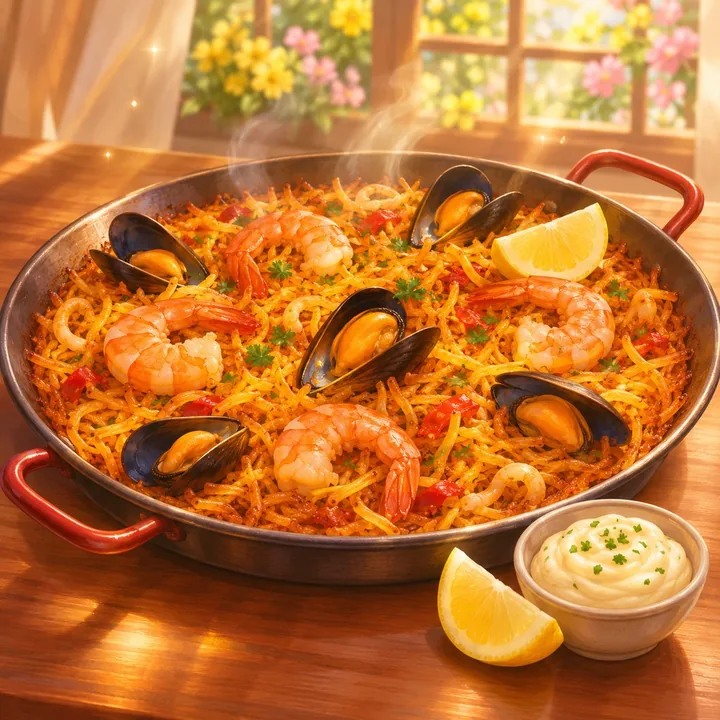
Fideuà comes from the Valencian coast and works like a paella made with short, thin noodles instead of rice. Toasting those noodles in oil before any liquid arrives is the step that decides everything. It gives them a nutty flavor and keeps them from turning soft and pasty in the stock.
- Prep
- 20 min
- Cook
- 45 min
- Total
- 1 hr 5 min
- Serves
- 4
Ingredients
 14 oz (400 g) short, thin fideos sold for fideuà, or spaghettini broken into 1-inch (2.5 cm) pieces
 12 oz (340 g) large shell-on shrimp
 1 lb (450 g) mussels, scrubbed and debearded
 8 oz (225 g) cleaned squid, cut into rings
 5 cups (1.2 L) fish stock or seafood stock
 A large pinch of saffron threads
 1/3 cup (80 ml) extra-virgin olive oil
 4 garlic cloves, finely chopped
 2 ripe tomatoes, halved and grated, skins discarded
 1 tsp sweet smoked Spanish paprika (pimentón)
 1/2 cup (110 g) mayonnaise, for a quick allioli
 Salt, to taste
 Lemon wedges, to serve
Instructions
- Peel the shrimp, leaving the tails on if you like, and save the shells. Stir 1 chopped garlic clove into the mayonnaise for a quick allioli and refrigerate. Throw away any mussels with broken shells, or open ones that don't close when tapped.
- Put the stock, shrimp shells and saffron in a saucepan and simmer for 10 minutes. Strain, return to the pan, taste and add salt if needed. Keep it hot.
- Heat 3 tbsp of the oil in a 15-inch (38 cm) paella pan or your widest ovenproof skillet over medium heat. Add the noodles and stir for about 5 minutes, until they are evenly deep golden brown. Tip them onto a plate.
- Add the remaining oil and raise the heat to medium-high. Sear the shrimp for 1 minute per side, until pink but not cooked through, then set aside. Cook the squid in the same pan for 2 minutes.
- Add the remaining garlic and stir for 30 seconds. Add the tomatoes and cook for 4 minutes, until dark and jammy, then stir in the paprika for 20 seconds.
- Return the noodles to the pan and stir to coat. Pour in 4 1/2 cups (1.1 L) of the hot stock and spread the noodles evenly. Simmer for 3 minutes, then push the mussels into the noodles, hinge side down. Cook for 7 minutes more without stirring, adding the last of the stock if the noodles are still hard when the pan looks dry. Add the shrimp for the final 2 minutes, until they are opaque and firm.
- Turn on the broiler. Slide the pan underneath for 2 to 3 minutes, watching closely, until the noodle ends curl and crisp. Skip this if your pan won't fit or isn't ovenproof.
- Rest for 5 minutes, loosely covered with a clean towel. Throw away any mussels that stayed shut, then serve from the pan with the allioli and lemon.
Tips
- Traditional allioli is only garlic, salt and oil, pounded by hand until it emulsifies. The version here is a home shortcut. Store-bought mayonnaise is made with pasteurized eggs, which avoids the raw yolk used in many homemade versions.
- If you can't get fish stock, simmer fish bones or extra shrimp shells in water for 30 minutes, or cut bottled clam juice with an equal amount of water. Clam juice is salty, so taste before adding any salt.
- Monkfish or firm white fish in 1-inch (2.5 cm) chunks can replace the squid. Sear them for 2 minutes and cook until opaque and 145°F (63°C).
Did you know?
- Fideua is like paella, but made with thin noodles in place of rice.
- It's from Spain's sunny eastern coast, near Valencia.
- A legend says a ship's cook invented it when rice ran short.
Questions
What is the difference between paella and fideuà?
The method and pan are similar, but fideuà uses short noodles instead of rice. It also cooks faster, in about 10 minutes once the stock goes in, and it's commonly served with allioli.
What noodles do you use for fideuà?
Short, thin Spanish noodles labeled fideos, often sold specifically for fideuà. Spaghettini or thin spaghetti broken into short pieces is the best stand-in.
Can I make fideuà without a paella pan?
Yes. Use your widest skillet so the noodles sit in a thin layer. If it's smaller than 12 inches (30 cm), cut the recipe in half, since a deep layer steams rather than dries out.
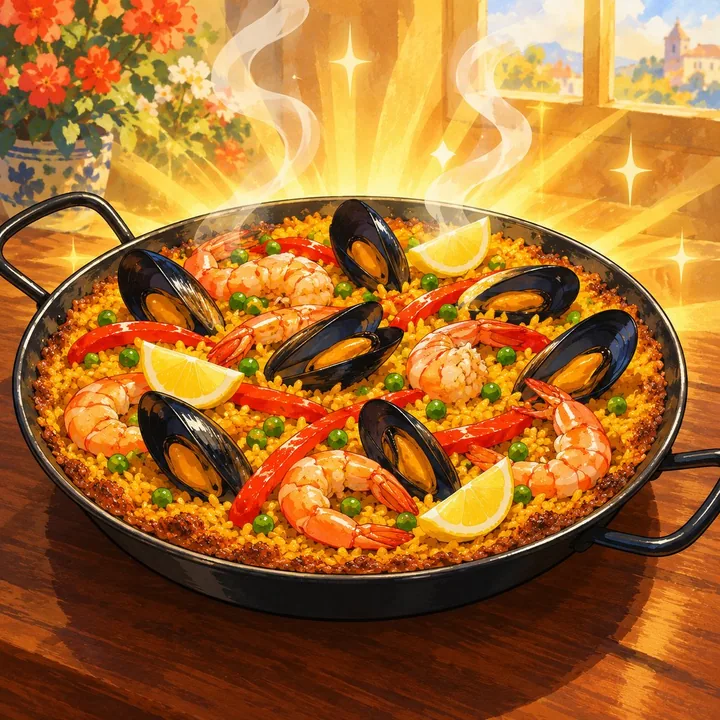 Seafood Paella
 Crema Catalana